The family's spirits history comes first
Zuidam Distillers dates the professional work of Fred and Hélène van Zuidam to 1976. Its early identity centred on liqueurs and genever, with the family enterprise based in Baarle-Nassau near the Belgian border. The business did not begin as a fully formed Millstone whisky brand, and describing it that way would erase the transition from traditional Dutch distilling to later whisky experiments.
1996 belongs to whisky experimentation
In the producer's own history, Patrick van Zuidam's ambition to make whisky led to experimental casks in 1996. Millstone emerged from this extended process; the source does not imply that every whisky expression in today's catalogue existed in 1996. WHISKAVIA separates experimentation, commercial release, brand history and individual batch identity.
Millstone is a product family, not the factory building
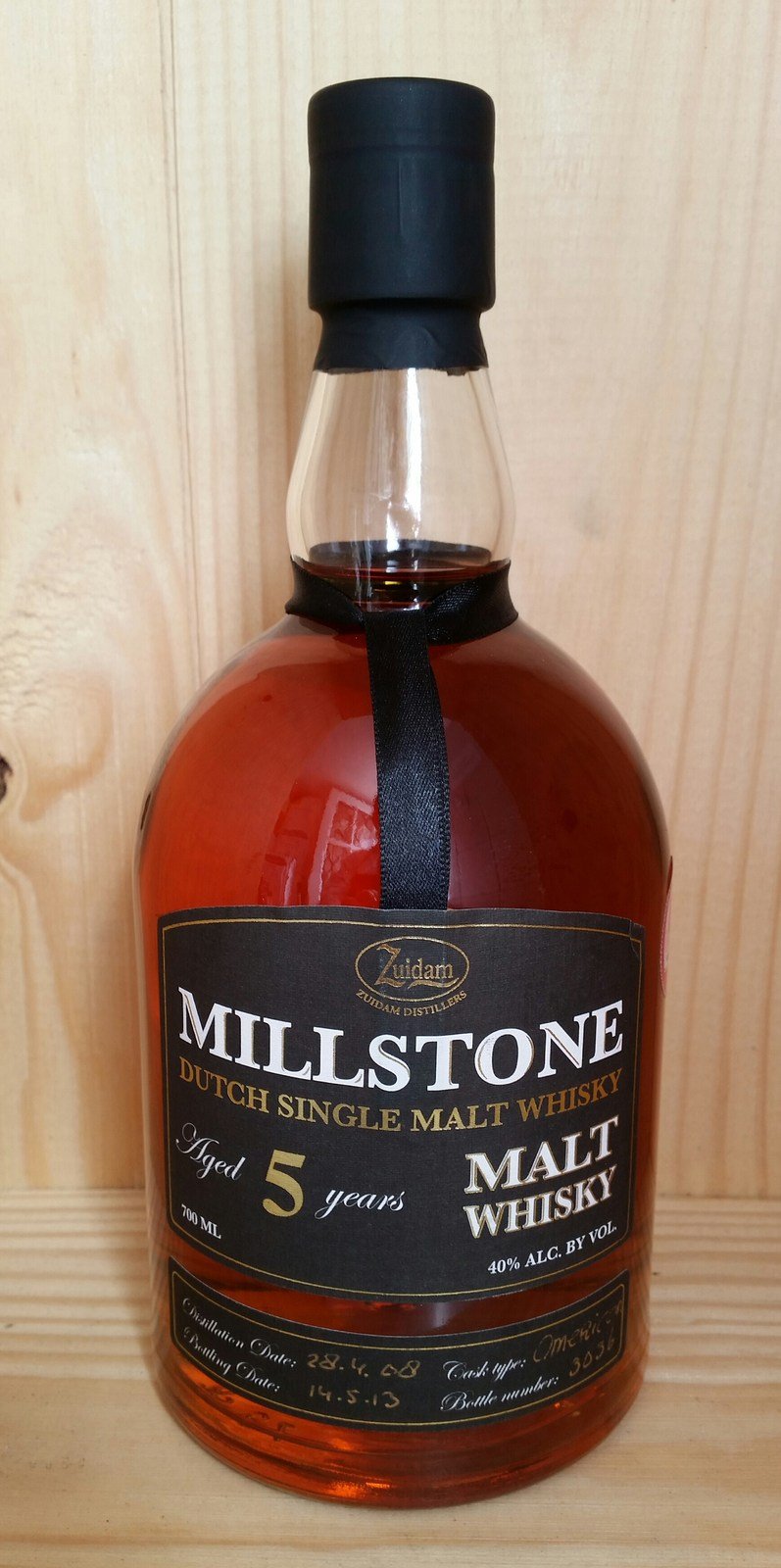
The name Millstone refers to the mills involved in preparing grain for whisky production. A 2015 photograph credited to Dominic Lockyer depicts a five-year-old Millstone bottle with its stated strength and volume. That photograph is evidence for the appearance of the specific product pictured; it says nothing about the architecture or access conditions at the Baarle-Nassau production site.
Technical descriptions are dated producer accounts
The producer discusses fermentation, slow distillation and multiple types of cask maturation in its whisky overview. These process descriptions can help frame technical questions, but should not become inferred tasting notes or fixed specifications for every historic release. Date, expression and production period remain essential for comparisons.
How to research a Dutch whisky timeline
Start with the legal and commercial identity of Zuidam, then document the actual production location, the initial experimental casks and the emergence of Millstone as a label. Add dated photographs only for what they depict and link current product specifications to their original manufacturer page. An independent atlas becomes more credible when it keeps these separate records connected rather than flattened.
Further reading
Original WHISKAVIA introduction; not a producer dossier or live travel listing.