
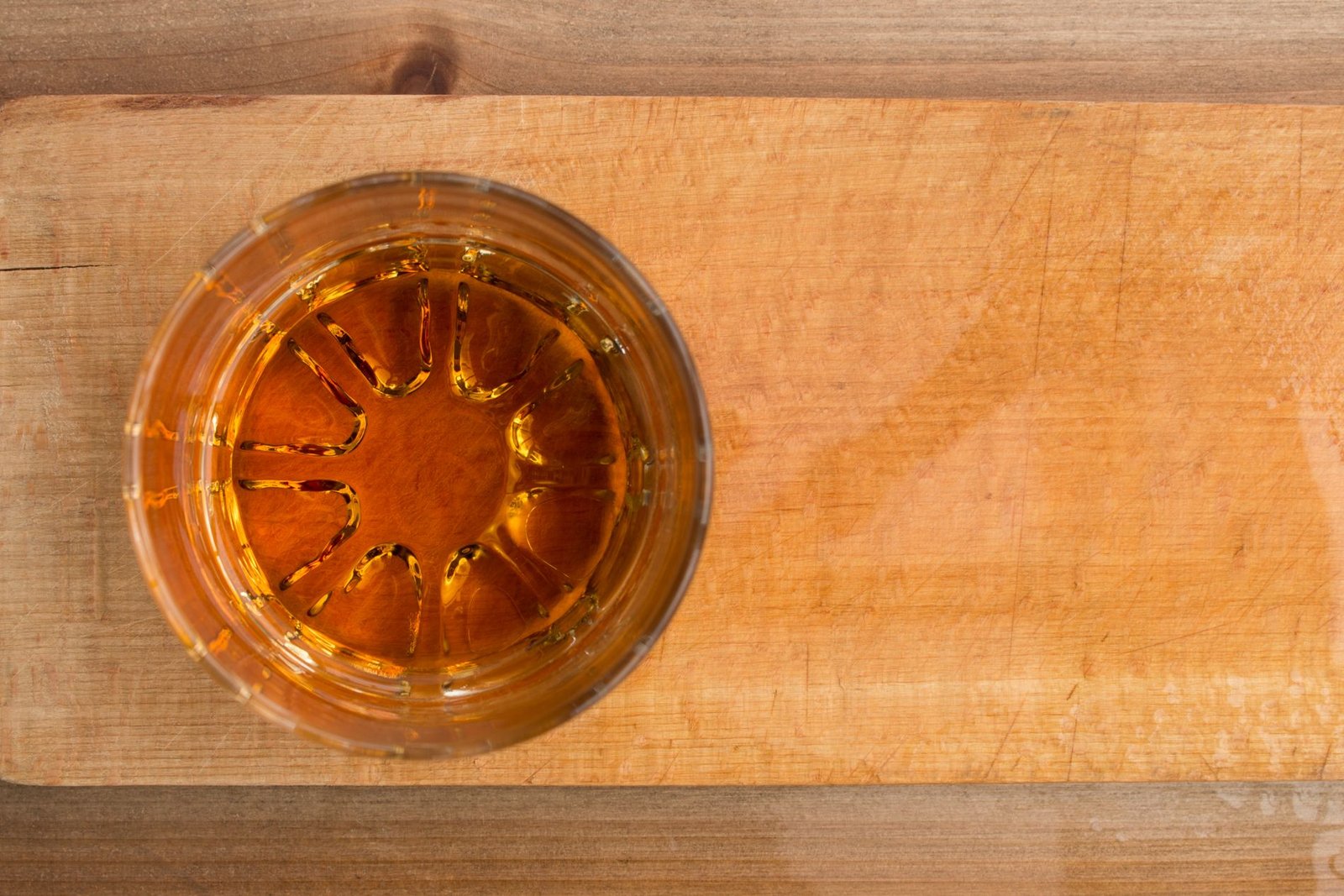
An invitation to the senses
Aroma is the beginning of a conversation, not a test with one correct answer. Someone may find orchard fruit where another finds stewed fruit; both may be trying to express a family resemblance within a complex mixture. Descriptors make sense only when they communicate what a person experienced. They do not prove that a fruit, flower or spice was used in production, and they should not be promoted as objective measurements without a specific analytical basis.
Context shapes perception
Start by considering the setting. A clean glass, a quiet environment and unhurried attention reduce avoidable distractions. Strong alcohol vapours can dominate when a person noses too aggressively, so gradual approaches and pauses are useful. Temperature and dilution can change what is perceived; make a note of the conditions rather than pretending the sample has a single, context-free aroma. Adults who choose not to taste can still explore the vocabulary through ordinary ingredients and explanatory exhibits.
From broad families to precise analogies
Organise initial descriptions into broad families: fruit, floral and herbal notes; cereal and baked-grain impressions; honeyed or sweet analogies; spice and wood; smoke, earth and coastal associations. Then refine only where useful. Green apple suggests a different impression from dried apple; fresh flowers differ from potpourri; a campfire analogy differs from toasted wood. Precision comes from making the comparison readable, not from adding the longest possible list of fashionable words.
Nose, palate, texture and finish
Distinguish smell from taste and texture. Nose refers to what is perceived before sipping; palate can involve basic tastes and aroma-related flavour perceptions; mouthfeel may be described as drying, oily or crisp; finish describes the sensations that remain afterwards. These categories overlap but should not be collapsed into a numerical quality claim. A person may enjoy a short, bright finish more than an intense lingering one, and the reverse preference is equally legitimate.
When an aroma is not proof
Production and aroma belong in connected but separate records. A cask description may explain a plausible source for certain impressions, but a caramel note does not verify that caramel colouring was used. A smoky impression does not determine which peat source was involved. Similarly, a distillery's geographical region cannot reliably assign notes to every bottle bearing its name. The only defensible expression-level aroma statements are attributed observations or explicit producer descriptions.
Ask questions instead of awarding points
Compare samples through questions rather than rankings. Which one gives a clearer cereal impression? Does adding a little water change the perceived fruit family? Is the second sample drier on the finish? Keep the samples anonymous for one round if it helps reduce expectations, but remember that blind tasting does not remove personal associations. Record discrepancies and revisit them later; your own vocabulary is allowed to change.
Whose observation is this?
WHISKAVIA's Aroma Universe can act as a dictionary of possibilities while its future interactive intelligence uses only sourced expression data. A meaningful sensory discovery tool must show whether a description comes from a producer, an independent taster or the reader's own notes. It must not treat the absence of a tasting note as proof that an aroma is absent. That transparency is the foundation of a trustworthy sensory reference.
Further reading
Original WHISKAVIA introduction; not a producer dossier or live travel listing.